






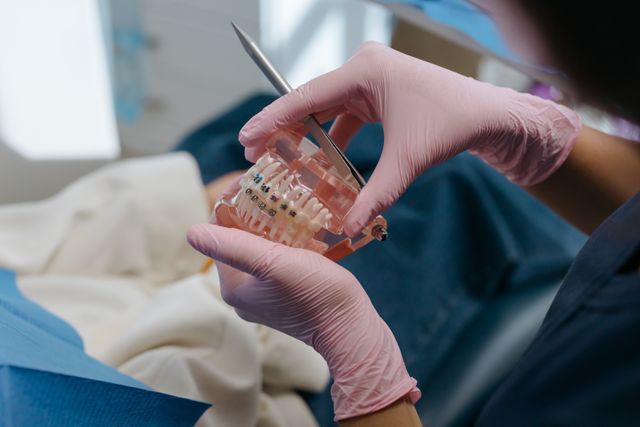
Orthodontics has always been about straightening teeth and correcting bites. Now a growing number of clinicians are asking whether it can do something more. The evidence is more nuanced than either side of the debate tends to admit.
According to the Australian Institute of Health and Welfare, almost half (47.7%) of Australian adults report at least two sleep-related problems. This represents a significant public health burden. It has prompted researchers, sleep physicians, and orthodontists to examine more closely whether jaw structure, dental arches, and facial development contribute to the ability of individuals to breathe well, particularly at night. Airway-focused orthodontics is at the crossroads of these questions. Interest is growing so rapidly that even a Macquarie dentist in general practice is regularly seeing patients inquiring about airway assessments as part of their dental care.
The Anatomy Behind the Idea
Airway-focused orthodontics is based on anatomy. The size of the dental arches, the position of the jaws, the posture of the tongue, and the dimensions of the palate contribute to the amount of space available in the upper airway. They have found that narrow dental arches, constricted palates, and retrusive jaw positions can be correlated with reduced airway dimensions and reduced airway space. Reduced airway space, especially during sleep, is associated with breathing problems. Obstructive sleep apnoea affects millions of people worldwide. It has been shown to be associated with cardiovascular disease, hypertension, and stroke. The topic of orthodontic influence on the airway has garnered serious clinical interest.
This is especially evident in children, as chronic mouth breathing and sleep-disordered breathing have been linked to behavioural problems, poor concentration, and decreased academic performance. If a parent brings a child to an orthodontist for crowded teeth and the clinician also asks about breathing patterns and sleep quality, that is not a deviation from orthodontic care. It is simply a recognition of the anatomical relationship between the structures that are being treated and the airway that sits directly behind them. This connection makes airway-focused orthodontics more than just a marketing strategy for a segment of practitioners.
What the Research Actually Found?
In a 2023 systematic review of 48 clinical studies on the effects of orthodontic and dentofacial orthopaedic interventions on upper airway volume, there was a cautiously positive finding that most non-extraction orthodontic and growth-modification treatments tended to increase airway volume following treatment. However, none of the included studies was randomised controlled trials. All were rated as having only medium methodological quality. Positive trends are not proof.
There is also an extraction question. The available adult studies of extraction-based orthodontic treatment produced mixed results. Some showed airway reductions. Others showed increases. Even where reductions were observed, the maximum reported decrease in airway volume was approximately 8% and was generally not statistically significant. One of the more robust claims by some airway-focused practitioners is that extraction-based orthodontic treatment is harmful to airway space. The evidence does not reliably support that claim at the level of certainty with which it is sometimes made.
Why the Trend Is Accelerating Anyway?
While there are evidence gaps, there are several legitimate forces driving the expansion of airway-focused orthodontics. These include a greater public awareness of the importance of sleep health, patients asking questions beyond aesthetics at dental appointments, CBCT imaging that allows clinicians to see airway volume, nasal passages, and skeletal relationships with a precision unavailable 10 years ago, and AI-assisted image analysis to improve diagnostic consistency. This has enabled airway assessment to become a practical part of the diagnostic workflow.
These conversations are also being broadened by interprofessional collaboration. ENT specialists, paediatricians and orthodontists are increasingly collaborating with sleep physicians to identify patients who might benefit from comprehensive airway evaluation. This means the question of airway health is no longer exclusively being considered in sleep clinics. It is now making its way to dental practices as well.
Where the Debate Gets Honest?
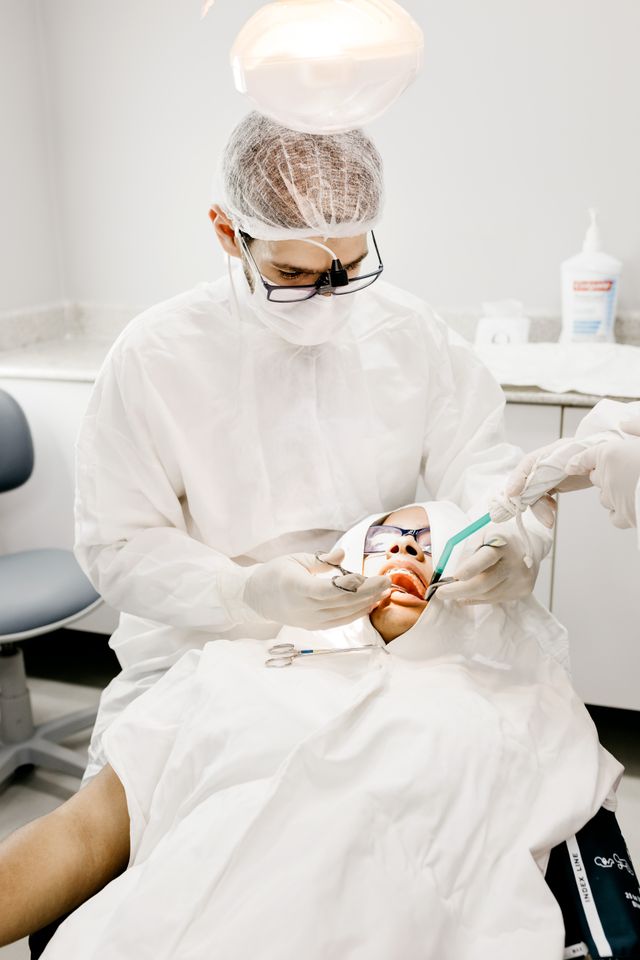
This criticism from within the profession is pointed and deserves attention. Promoters of airway expansion have claimed that it can address a wide variety of health conditions. These claims go far beyond what the current evidence supports. In addition, airway measurements based on CBCT scans are affected by tongue position, head posture, and breathing phase at the time of scanning. One scan does not capture the full picture. A larger airway volume on an image does not necessarily equate to better breathing or better sleep outcomes. Clinical symptom assessment, polysomnography, and multidisciplinary evaluation are still essential if airway health is truly the clinical question.
The bottom line for patients is this: airway-focused orthodontics is a legitimate, evolving field of clinical interest based on actual anatomical relationships. It is supported by preliminary evidence that needs to be more thoroughly explored. It is not a fringe idea. It is not yet at the stage where sweeping claims about transforming health through jaw expansion are supported by the evidence. It is reasonable for a clinician to raise airway questions during an orthodontic consultation. It is going too far to promise specific health outcomes from orthodontic expansion alone.








Leave a comment