






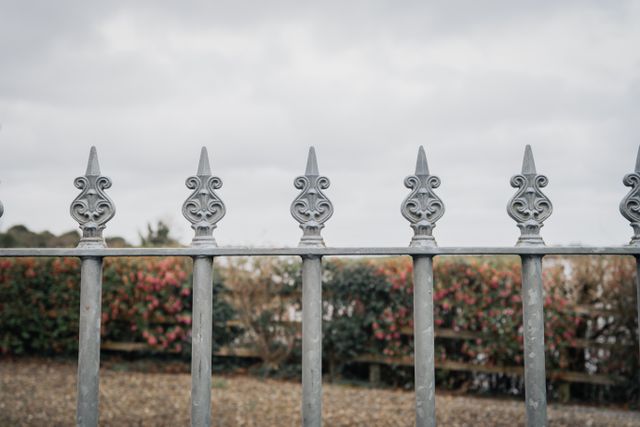
Just walk around nearly any Melbourne suburb and you will see the same thing: properties surrounded by fencing that looks strong, until you actually test it. A basic paling fence deters a dog from straying. A lightweight Colorbond panel discourages casual entry. Neither, however, will deter someone who has already made the decision to come in. It is the difference between fencing that signals security and fencing that provides it that most homeowners get wrong. This is exacerbated by the suburban sprawl of Melbourne. Its outer-ring suburbs feature big blocks, minimal street lighting, and few neighbours nearby. These conditions provide the time and cover that an entry-level fence cannot provide. This might be adequate on a terrace row in an inner suburb. It does little on a half-acre block in Cranbourne or Melton where no one walks by for an hour.
What Security-Grade Fencing Actually Does Differently
Height is only one part of purpose-built security fencing Melbourne installations. Anti-climb profiles, usually a flat top rail that removes footholds or a triple-point picket design, alter what is possible for someone approaching from the outside. Weld spacing on steel panels makes a difference because wider gaps provide a hand or foothold. Closer spacing does not. Post depth and compound make a structural difference that becomes immediately apparent the moment someone leans against a panel from the outside. Shallow-set posts in Melbourne’s sandy or clay-heavy soil move. Properly footed posts, set with concrete to the correct depth, do not. Powder-coat durability is as much a maintenance question as an aesthetic one. Melbourne’s variable weather cycles, from summer UV to winter rain, degrade cheap finishes within three to four years. They leave the steel beneath open to rust. This is not about making a property look imposing. It is about building something that actually prevents access.
The Neighbourhoods Pushing This Decision Earlier
While security fencing uptake is strongest in Melbourne’s outer-ring suburbs and industrial-residential corridors, it is not simply a case of crime statistics versus risk geography. A commercial property in Dandenong South sharing a fence line with a storage facility experiences vastly different traffic than a townhouse in Carlton. Big block sizes in Narre Warren or Pakenham mean neighbours are farther away. Natural surveillance is reduced. The transition from commercial to residential land use is prevalent in the middle and outer suburbs. It creates access complexity that basic fencing does not address. Loading zones require vehicle access during business hours. Pedestrian gates serve staff and customers separately. Boundary lines may run along public land. All these need more thought than the standard range of fencing provides.
Choosing an Installer Without Creating a Second Problem
There are plenty of operators in the security fencing market in Melbourne, but very few who will do the entire job right. The three areas that often create a gap between a quote that wins on price and an installation that performs over ten years are post footing depth, weld quality on panel joints, and gate hinge specification. An actual site assessment before quoting includes measuring the perimeter, determining soil type, identifying grade changes along the fence line, and inquiring about the access the fence requires. If a quote arrives without a site visit, it tells you something. Asking for a breakdown of post spacing, footing depth, and panel specification before signing gives you something to compare between operators. It also gives you something to hold the installer to once the job is complete.
After the Fence Goes Up
Short-term maintenance requirements are minimal for a properly installed security fence. Powder-coat inspection every two to three years, post-base checks after heavy rains, and gate hardware lubrication seasonally are usually enough. The gate conversation is the one most installers skip. That is the area where most perimeter security failures start. A fence is only as secure as its weakest entry point. That is almost always the gate, the hinge, the latch, the self-closing mechanism, the latch strike, the latch strike bolt, the strike plate, the strike bolt, the self-closing mechanism hinge, or the self-closing mechanism strike plate. If there was no good gate conversation during the fence installation, ask about gate specification, weight rating, hinge count, latch type, and post anchor depth before you commission the job. If the gate is the problem, what is built on either side of the gate is not very important.








Leave a comment